Table of Contents
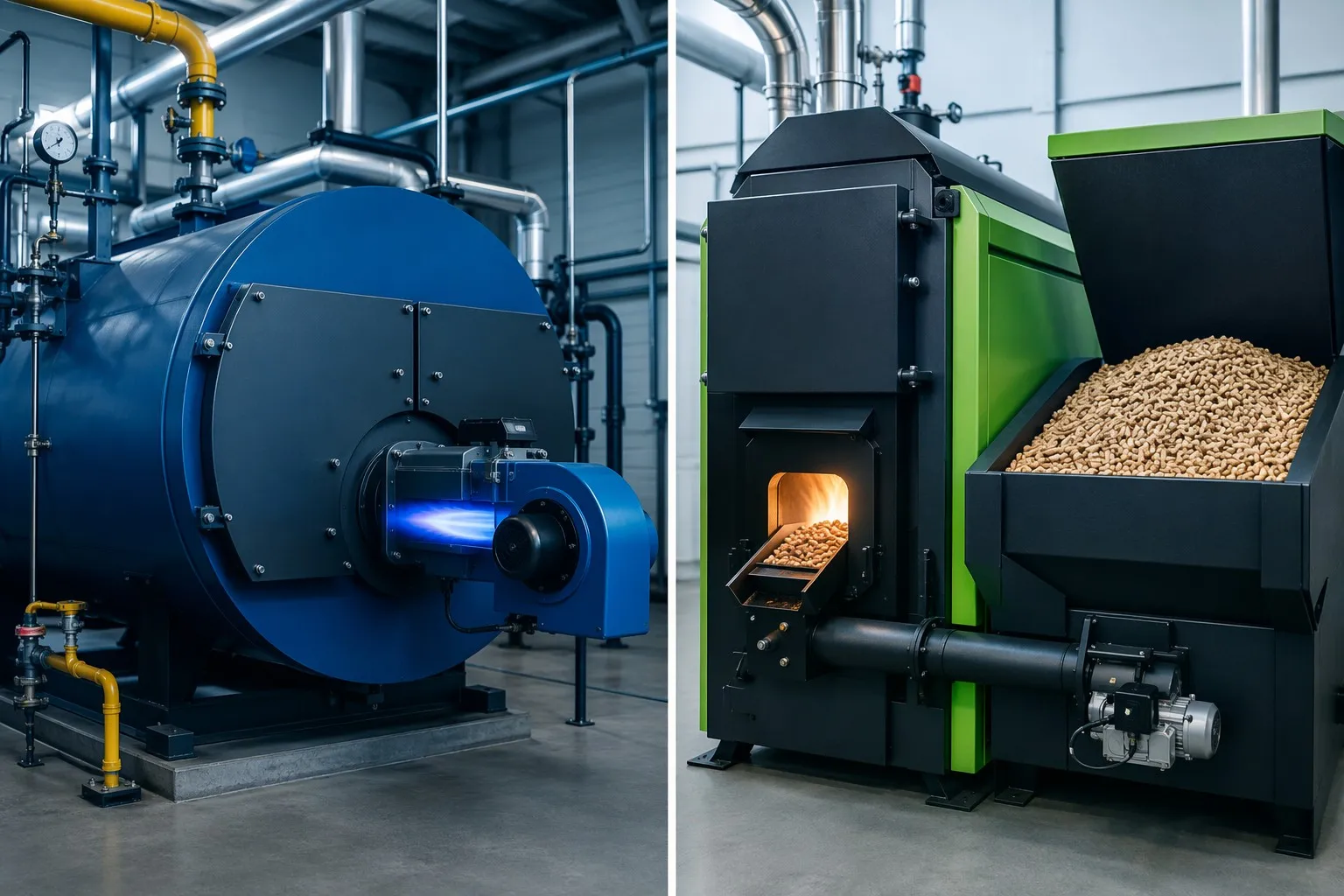
As energy markets shift and environmental regulations tighten, industrial buyers face a critical decision: should they invest in high-efficiency gas boilers or transition to renewable biomass systems?
Introduction: Why This Comparison Matters
In 2026, the industrial landscape is defined by two major forces: the volatility of natural gas prices and the global push toward carbon neutrality. For industries requiring large-scale steam production—such as food processing, textile manufacturing, and chemical production—the choice of boiler fuel is no longer just a matter of convenience; it is a long-term strategic decision that impacts operational costs, compliance, and brand reputation.
Gas boilers have long been the industry standard due to their clean operation and high automation. However, biomass boilers are gaining significant ground as a cost-effective, sustainable alternative. This guide provides a deep dive into the technical and economic factors that distinguish these two technologies.
Section 1: Fuel Cost Comparison
Fuel is the largest ongoing expense in boiler operation. The "cost per ton of steam" is the metric that truly matters.
Natural Gas Costs
Gas prices are highly dependent on global supply chains and regional infrastructure. While gas offers high energy density, its price volatility remains a risk. In many regions, gas costs are projected to remain higher due to carbon taxes being implemented on fossil fuels.
Biomass Costs
Biomass fuel—ranging from wood pellets and chips to agricultural waste like rice husks or palm shells—is often sourced locally. This reduces transportation costs and shields the user from global energy market swings. In agricultural hubs (e.g., SE Asia), biomass can be up to 40-60% cheaper than gas on a per-kcal basis.
Section 2: Efficiency Comparison
Efficiency determines how much of the fuel's energy is actually converted into usable steam.
- Gas Boilers (~96%): Modern condensing gas boilers achieve exceptional efficiency. The fuel burns almost completely, and heat recovery systems capture latent heat from flue gases.
- Biomass Boilers (~82-88%): Due to the moisture content in solid fuel and the complexity of solid-state combustion, biomass boilers generally have lower thermal efficiency than gas. However, EPCB's latest reciprocating grate designs have pushed biomass efficiency closer to the 90% mark.
Section 3: Environmental Impact
Gas: Burns cleaner in terms of particulate matter (PM) and sulfur oxides (SOx). However, it is a fossil fuel and a significant source of CO2 emissions. In 2026, carbon credits are becoming a significant cost factor for gas users.
Biomass: Considered "carbon neutral" because the CO2 released during combustion was recently absorbed by the plants during growth. While biomass requires more robust dust collection systems (cyclones or bag filters), it helps companies meet stringent net-zero targets.
Section 4: Initial Investment & ROI
A gas boiler system is generally simpler and cheaper to install. It requires minimal fuel storage space and less auxiliary equipment.
A biomass boiler requires fuel storage silos, conveyors, and ash handling systems, leading to a higher initial CAPEX (often 1.5x to 2x that of a gas system). However, the lower fuel cost often leads to a Return on Investment (ROI) within 18 to 36 months, depending on fuel price differentials.
Section 5: Maintenance & Operation
Gas boilers are "set and forget." They are highly automated and require minimal cleanup.
Biomass boilers require more manual oversight. Fuel quality must be monitored, and ash must be removed periodically. However, modern PLC-controlled biomass systems have automated most of these tasks, significantly narrowing the gap in labor requirements.
Section 6: Which to Choose? Decision Matrix
| Criteria | Gas Boiler | Biomass Boiler |
|---|---|---|
| Fuel Availability | Requires pipeline or LNG tank | Ideal for agricultural/forest regions |
| Space Requirement | Small footprint | Large (silos + conveyors) |
| Environmental Policy | High CO2 tax risk | Green energy incentives |
| Operating Cost | Moderate to High | Very Low |
Conclusion: The EPCB Recommendation
If your facility is in an urban area with strict space constraints and a reliable gas line, the EPCB WNS series Gas Boiler is the peak of reliability. However, for industrial plants in regions where wood waste or agricultural residues are abundant, the EPCB SZL series Biomass Boiler offers unbeatable long-term savings and sustainability.
Ready to optimize your steam production?
Consult with our engineers to get a customized energy cost analysis for your site.
Get a Free ConsultationNeed Professional Boiler Advice?
Contact EPCB for a free consultation on selecting the right industrial boiler for your specific application.
Speak with an Engineer