Table of Contents
- Introduction: Palm Oil Industry Boiler Needs
- Section 1: Why Biomass Boilers? (Free Fuel Strategy)
- Section 2: Boiler Capacity Requirements
- Section 3: Key Design Considerations
- Section 4: EPCB Biomass Boiler Solutions
- Section 5: Indonesia Case Study (20T/H Success)
- Section 6: Market Insights (Malaysia, Indonesia, Thailand)
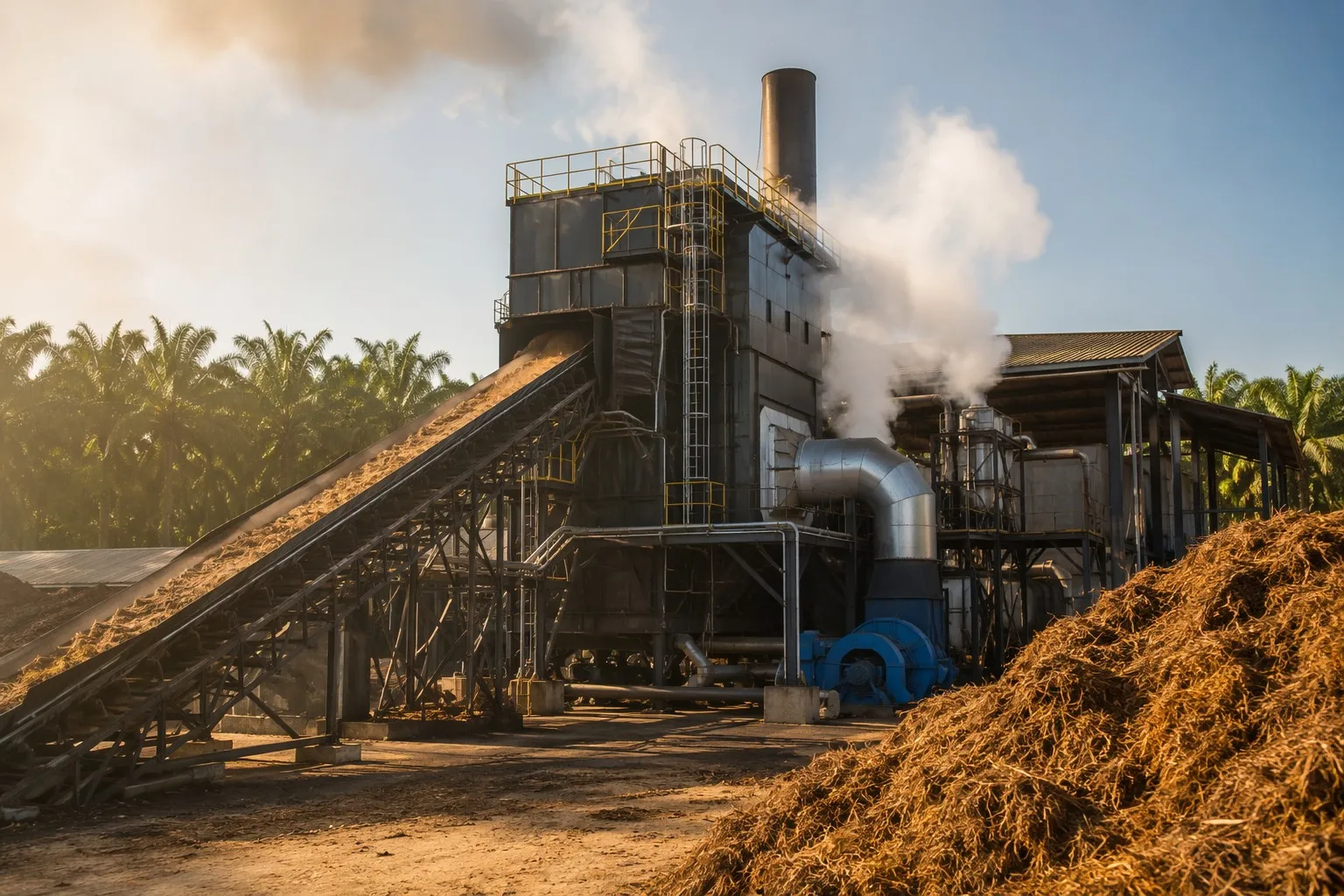
A typical palm oil extraction mill requires 0.55 to 0.65 tons of process steam per metric ton of Fresh Fruit Bunches (FFB) processed. For example, a 60 TPH FFB mill requires a 35–45 T/H high-pressure water-tube biomass boiler (typically 2.5–3.82 MPa, 350°C superheated). Firing a 70:30 mixture of mesocarp fiber and palm kernel shell (PKS) completely covers the mill's thermal and electrical needs with zero external fuel cost.
For palm oil industrys in Southeast Asia and Africa, the energy required for extraction doesn't have to be a costly expense. With the right biomass boiler, waste products become the power source.
Introduction: Palm Oil Industry Boiler Needs
Steam is the lifeblood of a palm oil mill. From the sterilization of fresh fruit bunches (FFB) to the clarification of oil and the drying of kernels, high-pressure steam is required at every stage of the process. In 2026, the industry is focused on circular economy principles—minimizing waste and maximizing energy independence.
Section 1: Why Biomass Boilers? (Free Fuel Strategy)
The palm oil extraction process generates a massive amount of solid waste. Instead of being a disposal headache, these materials are high-value fuels:
- Palm Kernel Shell (PKS): High energy density, low moisture, excellent for high-capacity boilers.
- Empty Fruit Bunches (EFB): While high in moisture and fiber, they are abundant and can be processed into a viable fuel.
- Mesocarp Fiber: Usually burned in combination with shells to provide consistent heat.
By utilizing these "free" fuels, palm oil mills can achieve nearly 100% energy self-sufficiency, reducing dependence on expensive diesel or external electricity.
Section 2: Boiler Capacity Requirements
Matching the boiler capacity to the mill's FFB processing rate is critical. Over-sizing leads to inefficiency; under-sizing causes production bottlenecks.
- Small Mills (5-10T FFB/Hr): Typically require a 4T to 6T/H steam boiler.
- Medium Mills (20-30T FFB/Hr): Require 10T to 15T/H steam capacity.
- Large Industrial Mills (45-60T+ FFB/Hr): Often deploy 25T to 35T/H boilers or multiple units for redundancy.
Section 3: Key Design Considerations
Burning palm waste is not without challenges. Biomass boilers for this industry must be designed for:
- Corrosion Resistance: EFB can contain high levels of chlorine and potassium, which can lead to slagging and tube corrosion. EPCB uses specialized alloy coatings for furnace tubes.
- Fuel Handling: Fibrous materials can clog standard feeding systems. Our reciprocating grates and screw feeders are designed specifically for the unique texture of palm waste.
- Variable Moisture: Seasonal rains affect fuel moisture. Our furnace designs include air pre-heaters to ensure stable combustion even with wetter fuel.
Section 4: EPCB Biomass Boiler Solutions
EPCB has developed the PalmPower Series (part of our SZL and DZL ranges) specifically for the tropics. Features include:
- Large combustion chamber to handle bulky EFB.
- Automatic ash removal to minimize downtime.
- High-efficiency multi-cyclone dust collectors to meet local DOE emission standards.
Section 5: Indonesia Case Study (20T/H Success)
A medium-sized mill in Sumatra recently replaced their aging diesel-fired units with an EPCB 20T/H SZL Biomass Boiler.
The Result: The mill now runs entirely on PKS and Fiber. They reported annual fuel savings of $2.2 million USD and reduced their carbon footprint by 85%. The ROI for the entire boiler house project was achieved in just 14 months.
Section 6: Market Insights (Malaysia, Indonesia, Thailand)
In Malaysia, MPOB (Malaysian Palm Oil Board) standards for emissions are tightening. In Indonesia, the push for B30/B40 biodiesel is driving mills to optimize their own energy use. EPCB boilers are designed to exceed these regional standards, ensuring long-term compliance and "Green Mill" certification.
Build a Sustainable Palm Oil Mill
Download our technical datasheet for Palm Waste Boilers or request a site visit from our SE Asia regional team.
Download Guide & Contact UsNeed Professional Boiler Advice?
Contact EPCB for a free consultation on selecting the right industrial boiler for your specific application.
Speak with an Engineer