Table of Contents
The Invisible Enemy: Hard Water in Boilers
In the world of industrial boilers, water is the lifeblood. However, not all water is created equal. Raw water from municipal supplies, wells, or rivers often contains high levels of dissolved minerals, primarily calcium and magnesium. This is known as "hard water." When this water is heated inside a boiler, these minerals precipitate out and form a hard, rock-like layer on the heat-transfer surfaces—a process known as scaling.
While a thin layer of scale might seem harmless, it is one of the most significant causes of operational inefficiency and equipment failure in boiler systems worldwide.
The Costly Consequences of Scale
1. Massive Efficiency Loss
Scale acts as an incredibly effective insulator. It prevents the heat from the burner from efficiently reaching the water. Research shows that just 1mm of scale can result in a 5% to 8% increase in fuel consumption. As the scale thickens, the energy waste compounds, leading to thousands of dollars in unnecessary fuel costs every month.
2. Tube Overheating and Failure
Because scale blocks heat transfer to the water, the metal of the boiler tubes and furnace becomes significantly hotter than designed. This leads to metal fatigue, bulging, and eventually, catastrophic tube ruptures. Overheating is the leading cause of emergency boiler shutdowns and expensive retubing projects.
3. Shortened Equipment Lifespan
A boiler designed to last 20-30 years can be rendered unusable in less than 5 years if the water quality is not managed. Scale also promotes "under-scale corrosion," where oxygen and acidic compounds become trapped against the metal, eating away at the boiler's structural integrity.
4. Increased Maintenance Costs
Removing scale requires chemical cleaning (acid washing) or mechanical scraping, both of which are labor-intensive, require system downtime, and can damage the boiler if not performed correctly.
Common Water Softening Methods
1. Ion Exchange Softeners
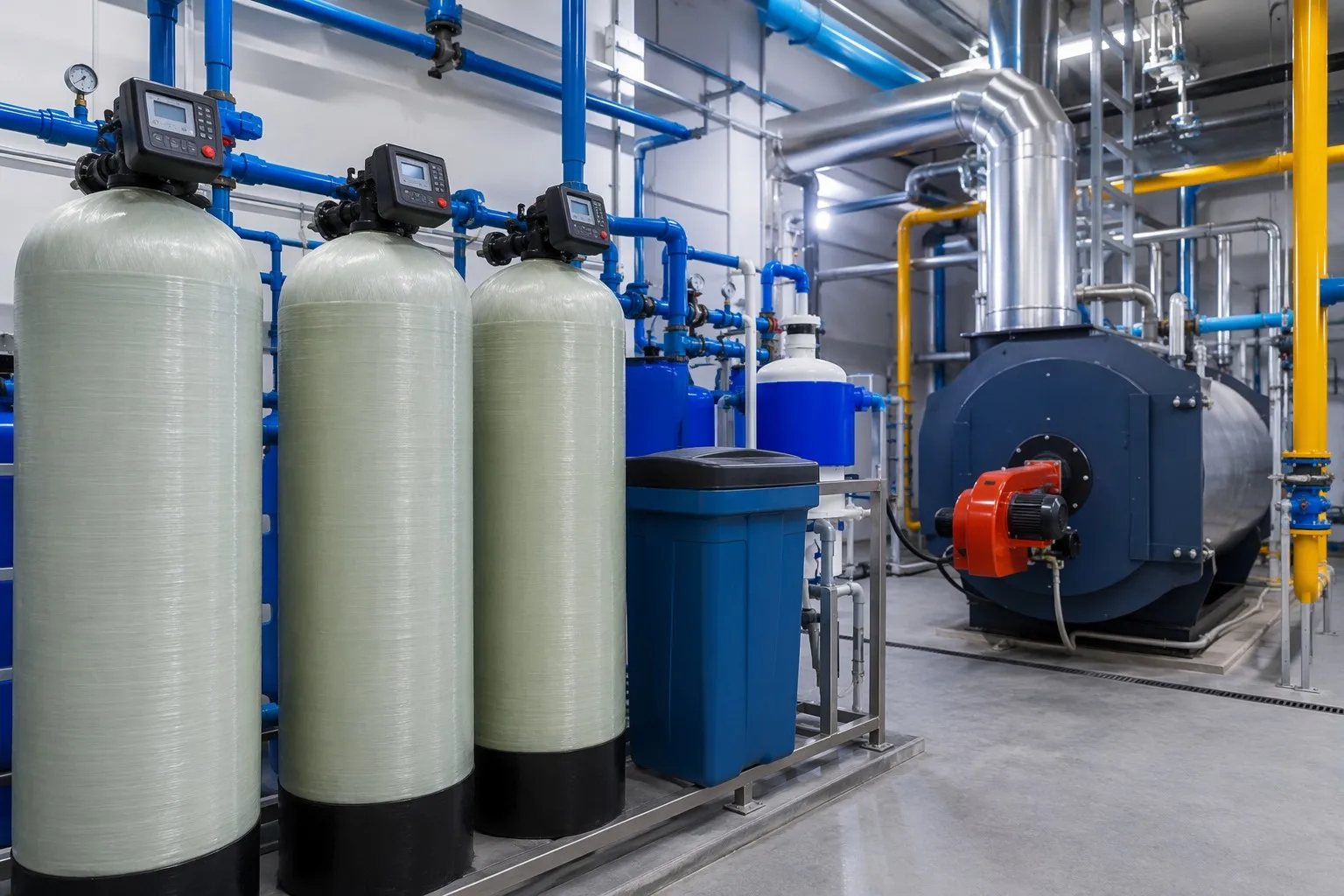
This is the most common method for industrial boilers. Water passes through a tank filled with resin beads charged with sodium ions. As hard water flows through, the resin "trades" its sodium for the calcium and magnesium. Periodically, the resin is regenerated using a brine (salt) solution to replenish the sodium.
2. Reverse Osmosis (RO)
RO systems use a semi-permeable membrane to remove up to 99% of all dissolved solids, not just hardness. While more expensive than simple softeners, RO provides high-purity water that significantly reduces the need for boiler "blowdown" (draining hot water to remove concentrated impurities), saving both water and energy.
3. Chemical Treatment
Scale inhibitors and dispersants are injected directly into the boiler water. These chemicals keep the minerals in suspension so they can be removed via blowdown rather than sticking to the tubes. This is usually used as a secondary defense alongside a softener.
Industrial Boiler Water Quality Standards
To keep a boiler healthy, certain parameters must be strictly maintained. While standards vary by boiler pressure, general guidelines include:
- Hardness: Ideally near zero (typically <0.03 mmol/L for low-pressure boilers).
- pH Level: Should be slightly alkaline (8.5 to 10.5) to prevent corrosion.
- Dissolved Oxygen: Must be removed (usually via a deaerator) to prevent pitting corrosion.
- Total Dissolved Solids (TDS): Managed through blowdown to prevent "priming" or "carryover" (water droplets entering the steam line).
EPCB's Integrated Water Treatment Solutions
At EPCB, we don't just sell boilers; we provide complete steam and hot water systems. Our integrated water treatment solutions include:
- Automatic Double-Tank Softeners: Ensuring a continuous supply of soft water even during regeneration cycles.
- Membrane-Based RO Systems: Tailored to your local water chemistry for the highest purity feed.
- Thermal and Vacuum Deaerators: To remove harmful dissolved gases before they enter the boiler.
- Dosing Systems: Automated chemical injection to maintain perfect water chemistry 24/7.
Conclusion
Water softening is not an optional luxury—it is a fundamental requirement for the safe and efficient operation of any industrial boiler. By investing in a robust water treatment system, you are ensuring the longevity of your boiler, protecting your process from unplanned downtime, and keeping your fuel bills as low as possible. Don't let scale destroy your bottom line.
Concerned about your water quality?
Send us a sample of your raw water, and EPCB's lab will provide a free analysis and a recommended treatment plan for your boiler.
Get a Free Water AnalysisNeed Professional Boiler Advice?
Contact EPCB for a free consultation on selecting the right industrial boiler for your specific application.
Speak with an Engineer