Table of Contents
Why Summer Is the Best Time for Boiler Maintenance
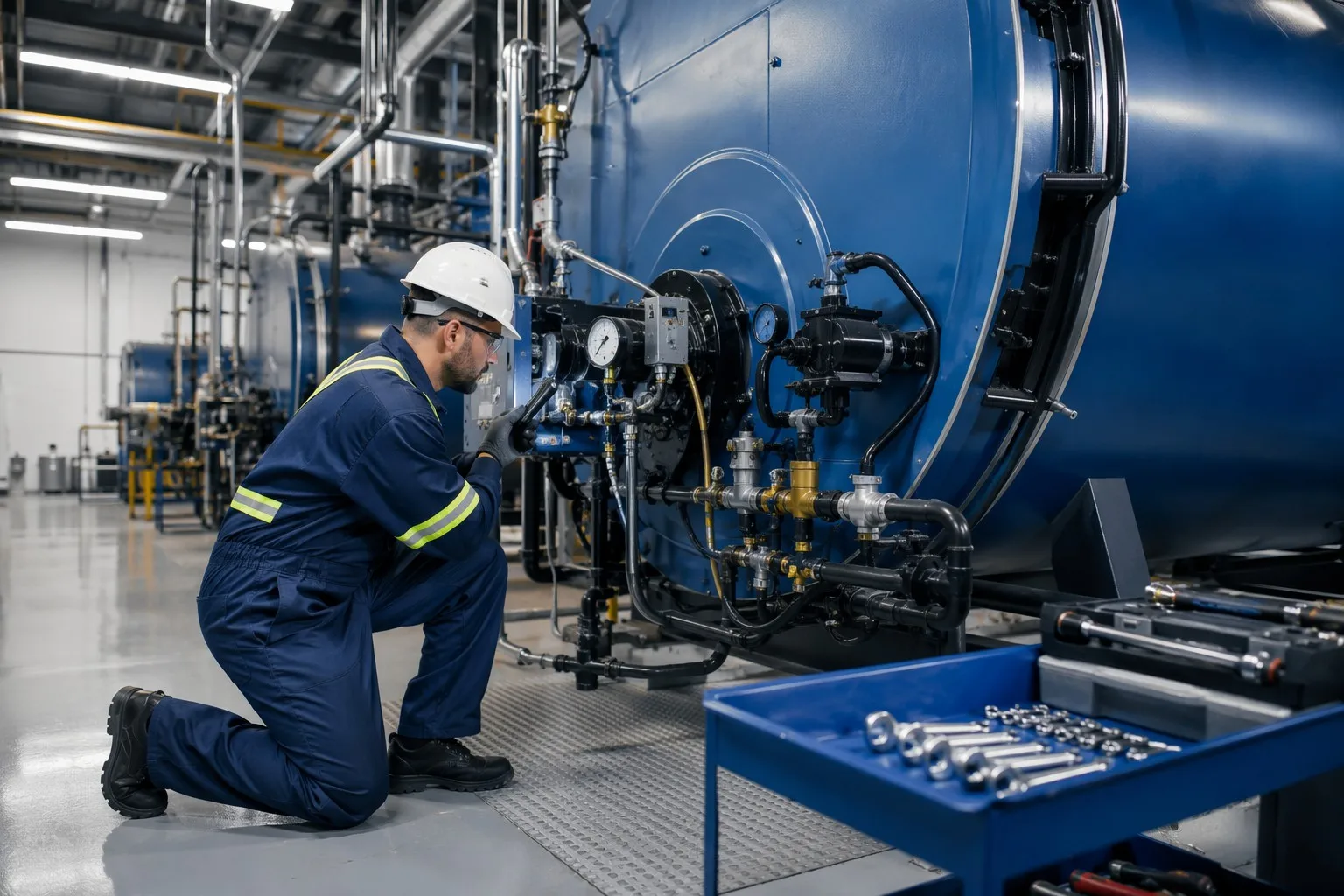
For most industries, summer represents a period of reduced steam demand. Heating loads drop, some production lines slow down, and plant managers finally have the window they need to perform thorough, non-emergency maintenance. Neglecting this opportunity is one of the most common and costly mistakes in boiler room management.
A boiler that enters the high-demand winter season without a proper summer overhaul is a boiler that is statistically far more likely to fail at the worst possible moment — during peak production in cold weather.
Summer Inspection Checklist
A systematic approach prevents overlooking critical items. Work through these areas in order:
- Pressure Vessel Inspection: Visual check of all welds, seams, and nozzles for cracks, corrosion, or leaks. Use dye-penetrant testing on suspect areas.
- Safety Valves: Test every safety valve by lifting the test lever. A valve that doesn't open freely must be replaced immediately — this is a non-negotiable safety item.
- Water Level Controls: Clean and calibrate all low-water cutoffs. Test them by actually dropping the water level to confirm they shut the burner down.
- Pressure Controls: Verify the operating and high-limit pressure controls are set correctly and functioning.
- Flue Gas Path: Open the boiler and inspect the flue side of the tubes for soot, scale, and corrosion.
Tube Cleaning & Scale Removal
Scale (on the water side) and soot (on the flue gas side) are the twin enemies of boiler efficiency. Even 1mm of scale can increase fuel consumption by 5–8%. Summer is the time to address both:
Water-Side Scale
Chemical acid descaling is the most effective method. A qualified technician will circulate a diluted acid solution through the boiler, neutralize it, then flush thoroughly with fresh water. After cleaning, a boroscope inspection confirms the tubes are clean.
Flue-Side Soot
Wire brushes and compressed air are used to clean soot from the fire-side of the tubes. Pay special attention to the back-end tube sheets where soot accumulation is heaviest. Soot is a natural insulator — removing it directly improves heat transfer efficiency.
Combustion System Tuning
The burner and combustion controls drift over time and seasons. A combustion tune-up involves:
- Cleaning and inspecting the burner nozzle and electrodes.
- Measuring the flue gas O2 level with a calibrated analyzer. Optimal is typically 2–3% O2 for gas-fired units.
- Adjusting the air-fuel ratio to achieve the best efficiency with minimum emissions.
- Verifying the flame shape and color (should be stable blue for gas; no yellow tips).
A properly tuned combustion system can recover 2–5% of fuel efficiency, paying for the maintenance call within weeks.
Water Treatment During Downtime
If the boiler will sit idle for more than a few weeks, it must be properly "wet-laid" or "dry-laid" to prevent corrosion:
- Wet Layup: Fill the boiler completely with deaerated water treated with oxygen scavengers and alkaline chemicals. Best for short-term (1–3 months) storage.
- Dry Layup: Drain completely, dry thoroughly with warm air or desiccants, then seal all openings. Best for long-term storage (3+ months).
Documentation & Record Keeping
Proper records are essential for insurance, regulatory compliance, and resale value. After every summer maintenance:
- Update the boiler log with all work performed, parts replaced, and test results.
- File copies of all safety valve test records and pressure test certificates.
- Note the next scheduled inspection date prominently in the log.
EPCB Preventive Maintenance Service
EPCB Boiler offers comprehensive preventive maintenance contracts for all boiler types — whether EPCB-manufactured or otherwise. Our certified service engineers will perform a full summer inspection, combustion tune-up, safety valve testing, and water quality analysis, providing a detailed written report upon completion.
Don't Wait for a Breakdown
Schedule your summer boiler maintenance now. Our service team is available globally and can be on-site within days.
Book a Maintenance VisitNeed Professional Boiler Advice?
Contact EPCB for a free consultation on selecting the right industrial boiler for your specific application.
Speak with an Engineer