Table of Contents
Understanding Industrial Boilers
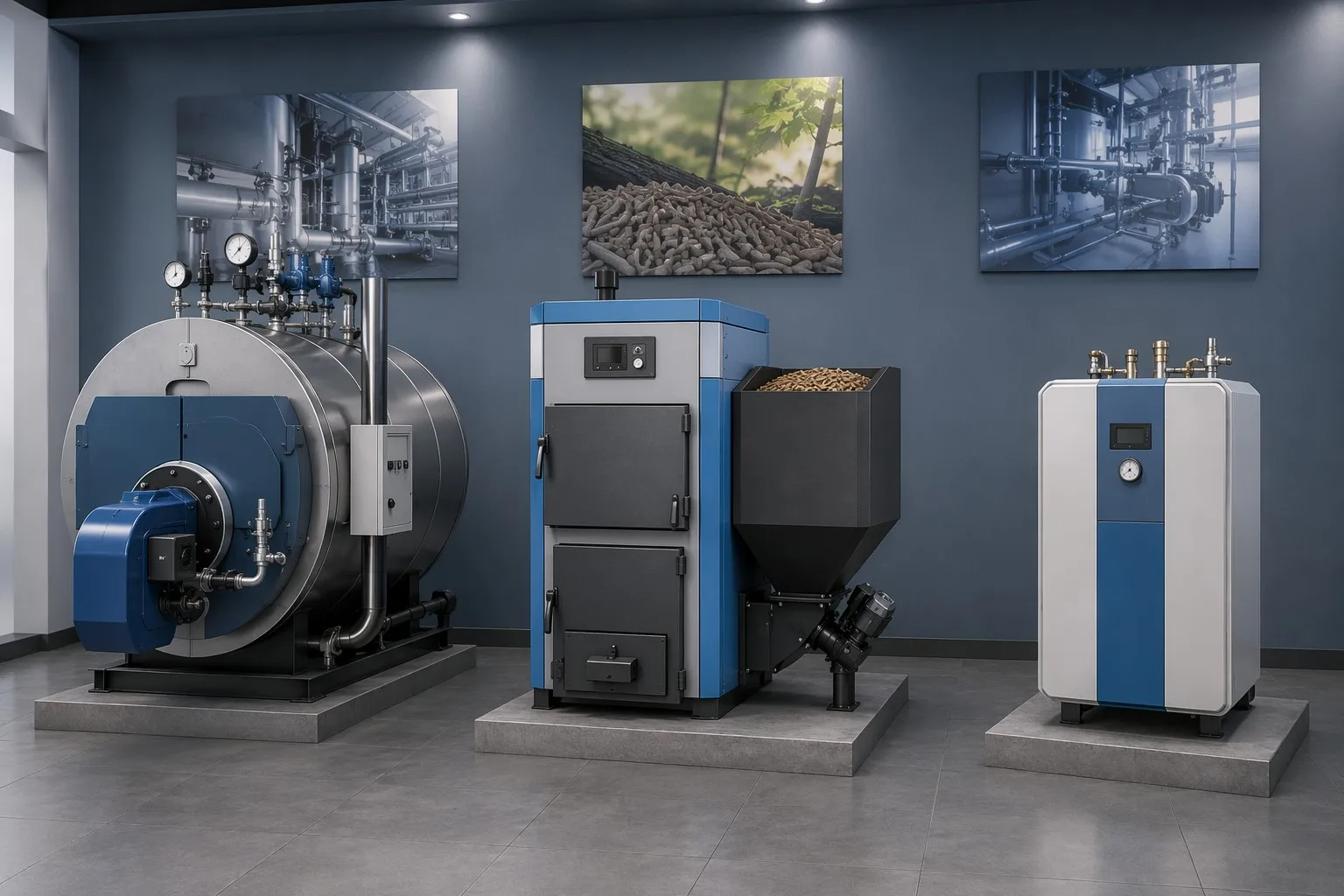
Industrial boilers are complex pressure vessels designed to transfer heat from a fuel source (combustion or electricity) to a fluid (usually water) to produce steam or hot water. Because they are used in a vast range of industries—from food processing and textile manufacturing to power generation—boilers come in many different designs. Choosing the right "classification" of a boiler is the most important step in any thermal energy project.
In this guide, we break down boiler systems by their structure, fuel type, pressure, and application.
1. Classification by Structure
This is the most fundamental way to categorize a boiler's design.
Fire-Tube Boilers
In a fire tube boiler, hot combustion gases pass through tubes that are submerged in a large tank of water. The heat is transferred from the tubes to the surrounding water. Pros: Compact, easier to install, handle load fluctuations well due to high water volume. Cons: Limited pressure (typically <2.5 MPa) and capacity (up to 20-30 tons/hr).
Water-Tube Boilers
In a water tube boiler, the water flows inside the tubes while the hot combustion gases circulate around them. Pros: Can handle extremely high pressures and massive capacities (hundreds of tons/hr), fast steam generation. Cons: More complex to maintain, requires very high-quality water treatment.
2. Classification by Fuel Type
The choice of fuel is often dictated by local availability, cost, and environmental regulations.
- Gas-Fired Boilers: Use natural gas, LPG, or biogas. Clean-burning, easy to automate, and highly efficient.
- Oil-Fired Boilers: Use diesel, heavy oil, or waste oil. Common in areas without gas infrastructure.
- Biomass Boilers: Burn wood chips, pellets, rice husks, or other agricultural waste. A carbon-neutral and sustainable option.
- Coal-Fired Boilers: Traditional and low fuel cost, but require extensive emission control systems (dust removal, desulfurization).
- Electric Boilers: Zero local emissions, very compact, and high efficiency (99%+). Ideal for areas with cheap electricity or strict emission zones.
- Thermal Oil Boilers: Use a special organic heat transfer fluid instead of water. Can reach temperatures over 300°C at very low pressure.
3. Classification by Pressure
Boilers are designed and manufactured according to strict safety codes (like ASME or GB) based on their operating pressure.
- Low Pressure: Steam boilers <0.1 MPa or hot water boilers. Used for building heating and small processes.
- Medium Pressure: 0.1 MPa to 3.8 MPa. The standard range for most industrial manufacturing.
- High Pressure: >3.8 MPa. Primarily used for power generation and large-scale chemical plants.
4. Classification by Application
What is the end product of the boiler?
- Process Steam Boilers: Produce steam for sterilization, cooking, drying, or chemical reactions.
- Power Generation Boilers: Produce high-pressure, superheated steam to drive turbines.
- Hot Water Boilers: Used for space heating, laundry, or domestic hot water in hotels and hospitals.
- Specialty Boilers: Including waste heat boilers (capturing heat from engines or furnaces) and vapor generators.
Comparison Table: Fire-Tube vs. Water-Tube
| Feature | Fire-Tube (WNS) | Water-Tube (SZS/SZL) |
|---|---|---|
| Max Capacity | ~20 t/h | Unlimited (100+ t/h) |
| Max Pressure | ~2.5 MPa | Up to 10+ MPa |
| Safety | Moderate (Large water volume) | High (Small water volume) |
| Typical Use | Textiles, Food, Hotels | Chemicals, Power, Large Heating |
How to Choose the Right Boiler Classification
When selecting a boiler, answer these four questions:
- What is the peak steam demand? If it's over 20 tons/hr, you likely need a water-tube design.
- What is the cheapest/most accessible fuel in your region? This will dictate whether you go gas, biomass, or electric.
- What pressure does your process require? Remember to account for pressure drops in your piping system.
- What are your local emission regulations? Urban areas might require electric or ultra-low NOx gas systems.
EPCB's Expertise in All Boiler Types
EPCB specializes in the design and manufacture of a wide variety of industrial boilers:
- WNS Series: High-efficiency horizontal fire-tube gas/oil boilers.
- SZS Series: Large-capacity double-drum water-tube gas/oil boilers.
- SZL/DZL Series: Robust biomass and coal-fired water-tube boilers.
- YY(Q)W Series: High-temperature thermal oil boilers for process heating.
- LDR Series: Vertical electric steam boilers for clean environments.
Conclusion
The classification of your boiler system is the foundation of your factory's energy strategy. By understanding the structural differences and fuel options, you can select a system that balances initial investment with long-term operating costs. EPCB's global team is ready to help you navigate these choices and deliver a custom-engineered solution for your specific industry.
Still unsure which boiler is right for you?
Contact our application engineers for a detailed project assessment and a customized boiler recommendation based on your unique requirements.
Request a Technical ProposalNeed Professional Boiler Advice?
Contact EPCB for a free consultation on selecting the right industrial boiler for your specific application.
Speak with an Engineer