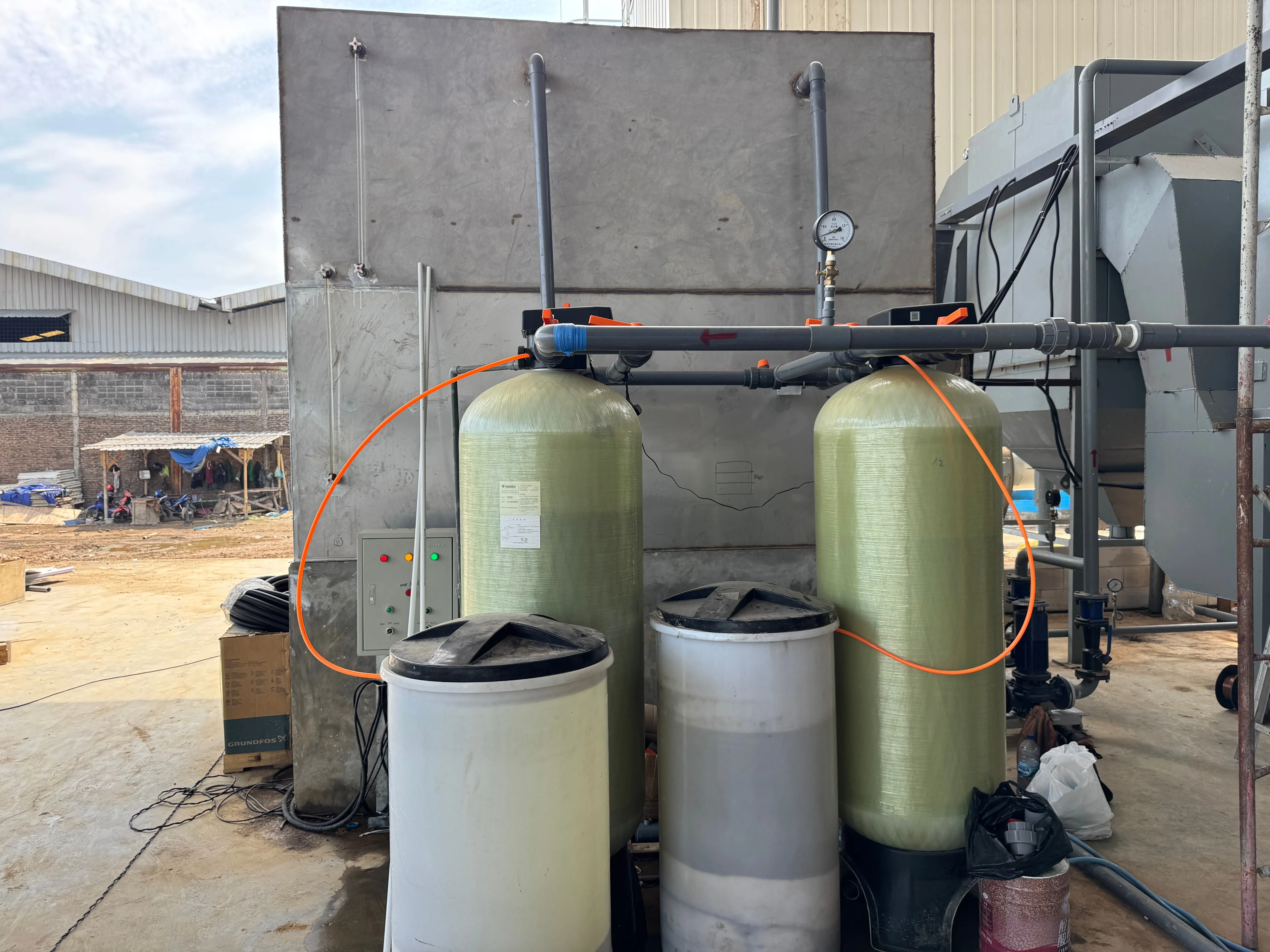
To maintain high thermal efficiency and eliminate boiler tube rupture hazards: 1) Total Hardness must be ≤ 0.03 mmol/L (≤3 mg/L CaCO₃) to prevent thermal insulating scale; 2) Dissolved Oxygen must be stripped to ≤ 0.015 mg/L (15 ppb) via thermal deaeration to stop oxygen pitting corrosion; 3) Feedwater pH must remain between 8.5 and 9.5 (Boiler water pH 10.0–12.0) to preserve the magnetite protective passivating layer.
Table of Contents
Water chemistry is the single greatest determinant of an industrial steam boiler's operational lifespan and annual fuel consumption.
1. International Boiler Water Quality Standards Comparison
Water chemistry is the single greatest determinant of an industrial steam boiler's lifespan. Over 80% of premature boiler tube failures result directly from inadequate water treatment. Below is a comparative cross-reference of international limit values for industrial boilers operating below 2.5 MPa:
| Parameter | Feedwater Limit (ASME) | Feedwater Limit (EN 12952) | Feedwater Limit (GB 1576) | Hazard of Non-Compliance |
|---|---|---|---|---|
| Total Hardness (Ca²⁺ + Mg²⁺) | ≤ 0.05 mg/L CaCO₃ | ≤ 0.02 mmol/L | ≤ 0.03 mmol/L | Calcium carbonate/sulfate scale, tube blistering & rupture. |
| Dissolved Oxygen (O₂) | ≤ 0.007 mg/L (7 ppb) | ≤ 0.02 mg/L (20 ppb) | ≤ 0.015 mg/L (15 ppb) | Rapid oxygen pitting perforation in economizers and drums. |
| pH Value (at 25°C) | 8.3 ~ 10.0 | > 9.2 | 7.0 ~ 9.0 (Feed) / 10~12 (Drum) | Acid corrosion (<8.0) or caustic gouging (>12.5). |
| Total Dissolved Solids (TDS) | ≤ 100 mg/L (Feed) | ≤ 500 μS/cm | Drum TDS ≤ 3,500 mg/L | Water carryover, foaming, wet steam, superheater fouling. |
| Oil & Organic Matter | ≤ 1.0 mg/L | ≤ 1.0 mg/L | ≤ 2.0 mg/L | Foaming, false water level readings, sludge bake-on. |
2. Fuel Penalties from Boiler Tube Scaling
Calcium and magnesium scale has extremely low thermal conductivity (approx. 0.1 to 1.5 W/m·K, compared to 50 W/m·K for carbon boiler steel). Even microscopic scale layers impose severe energy penalties:
- 0.5 mm Scale: Increases fuel consumption by approximately 1.5% to 2.5%.
- 1.0 mm Scale: Causes 3.0% to 5.0% excess fuel burn and raises tube metal temperature by 150°C.
- 3.0 mm Scale: Drives fuel waste above 9.0%; tube wall temperatures easily exceed metallurgical limits (450°C+), causing localized creep, tube bagging, and violent rupture.
Estimate Your Fuel Costs with Clean Tubes
See how maintaining 96.9% boiler efficiency saves tens of thousands in fuel annually.
3. Deaeration: Thermal vs. Vacuum vs. Chemical
Water softening addresses mineral scale, but dissolved oxygen (O₂) is the primary chemical culprit in pipe perforation. Oxygen solubility decreases to zero at water's boiling point.
- Thermal Deaerators (Atmospheric / Pressurized): Steam is sparged into incoming feedwater at 104°C (0.02 MPa gauge), reducing dissolved oxygen below 7 ppb (≤0.007 mg/L) without ongoing chemical consumption. This is the gold standard for boilers ≥4 T/H.
- Vacuum Deaerators: Lower water boiling temperature using vacuum pumps (50°C–70°C), suitable for hot water boilers.
- Chemical Oxygen Scavengers: Dosing sodium sulfite (Na₂SO₃) or diethylhydroxylamine (DEHA) is used for small package boilers (≤2 T/H) as secondary scavengers downstream of thermal deaerators.
4. Blowdown Management: Balancing Water Quality and Energy Loss
As clean steam evaporates, non-volatile minerals concentrate in the boiler drum. To avoid foaming and moisture carryover into process steam, a fraction of concentrated water must be purged via surface continuous blowdown.
Example: If feedwater TDS is 150 mg/L and drum limit is 3,000 mg/L, required blowdown is $[150 / (3,000 - 150)] \times 100\% = 5.26\%$. Integrating an automatic continuous blowdown controller with a flash tank heat recovery exchanger can recover over 80% of blowdown thermal energy.
Concerned about water quality or tube scaling?
Send your raw water laboratory report to EPCB chemists for a customized deaeration and softening skid design.
Request Water Chemistry Review